Start with chicken-keeping basics, or
learn to integrate chickens into a permaculture homestead.
Are you
thinking of
jumping on the backyard chickens bandwagon? Chickens are easy, fun,
and tasty, but their care can seem a bit daunting to the
uninitiated.
Our chicken ebooks (99 cents on Amazon) teach you everything you
need to know to keep
your chickens happy, then to put them in your belly.
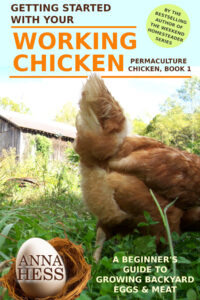
The raw beginner will enjoy The
Working Chicken, which presents just the basics in about 27
paperback-sized pages. This ebook now includes a bonus children's
picture book as well to inspire the next generation of chicken lovers!
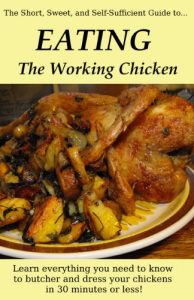
The companion ebook, Eating
the Working Chicken, covers butchering your backyard birds.
Both of my beginner books come free,
along
with a companion video, with every order of our POOP-free chicken waterer, or
you can download them from Amazon for 99 cents.
More advanced
readers
told me that they are itching to find out ways to make backyard
chickens self-sufficient, cheaper, less smelly, and more fun. So
I've starting a more advanced series of ebooks --- The Permaculture
Chicken saga --- to delve deeper into integrating chickens into your
homestead.
Later ebooks in the series will cover forest pastures, chicken moats,
and more. Subscribe to the RSS feed below (or email anna@kitenet.net and ask to be added to my
email list) to find out when new chicken ebooks launch.
Several of you have emailed
to ask about the next installment in the Permaculture Chicken series. The trouble is
that pasturing is a big topic and I got bogged down in the sheer size
of the undertaking. At the same time, Amazon changed their
policies so I could only cram about 60 pictures into an ebook if I
wanted to keep the price down to 99 cents.
Rather than overwhelming
myself with writing a gargantuan tome all at once (and having to boost
the price), I decided to break pasturing up into two or three
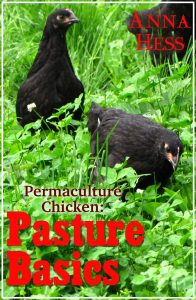
segments. The
first installment,
as the name suggests, is the basics --- why grazing chickens is
different from grazing ruminants, how pasture plants grow in rotational
pastures, and how to keep traditional pastures lush despite chicken
scratching.
Next on my writing
agenda is a sum-up of our fridge root cellar experiments, but after
that I should be back to work on the next Permaculture Chicken
installment --- forest pastures, chicken moats, and more. Thanks
for reading!
Back before I learned to
self-publish, I wrote a children's picture book about chickens for a
friend's baby. Since then, the file has been sitting on my
computer gathering e-dust.
But no longer!
When I dusted off the virtual pages, I discovered the story still
captured my interest, so I thought it might capture yours as well.
Rather than selling the
picture book separately, I added it as a bonus at the end of The
Working Chicken.
If you've bought the ebook on Amazon, you should get an email from
Amazon shortly letting you know that you can download the updated
version for free. If you don't have the Amazon ebook, just
email anna@kitenet.net and I'll send you a copy of
Hop, Step, Peck...RUN! Enjoy!
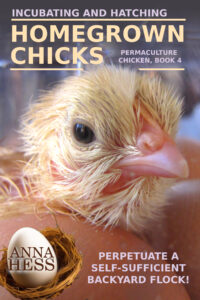
The boook walks
beginners through
perfecting the incubating and hatching process so they can enjoy the
exhilaration of the hatch without the angst of dead chicks. 92 full
color photos bring incubation to life, while charts, diagrams, and
tables provide the hard data you need to accomplish a hatch rate of 85%
or more.
Topics include:
How chickens fit into a permaculture system
Reasons to incubate your own eggs
The mother hen option
Choosing the best eggs, with information on
seasons, parentage, egg shape, and shell quality
Storing and marking eggs
What to expect when buying mail order eggs
Choosing the best incubator
The basics of incubation: time, temperature, humidity, turning,
etc.
Pros and cons of dry incubation, including ways to calculate egg
weight loss
Candling eggs
What to do during temperature spikes and power outages
Preparing for the hatch,
hatching, and dry off period
When and how to help chicks out of the shell
How to tell whether unhatched eggs are alive
Calculating percent viable eggs, hatch rate, and survivability
Troubleshooting incubation problems, including tips on autopsying
eggs and a dichotomous key to pinpoint causes
Diagnosing, preventing, and dealing with hatch-related ailments
like wry neck, spraddle leg, and more
Caring for sick chicks and
knowing when and how to euthanize
Basic needs of chicks after hatching: temperature, food, and water
Housing chicks, with information on outdoor brooders
Since
it's chick-starting season, I shouldn't be surprised that the first
facet of the Permaculture Chicken that I
wanted to write about was ways to incubate and hatch homegrown chicks
successfully.
I've learned a lot over
the last couple of years about how to get better hatch rates (and feel
less stressed during the process) and I thought I'd share my tips to
help others achieve the same skill set faster than I did.
Stay tuned to this space
for an announcement when the Incubation Handbook is ready to go
live. I expect a launch date of late March or early April.
Right about the same time our second set of eggs hatches....
Want
to be notified when new comments are posted on this page? Click on the
RSS button after you add a comment to subscribe to the comment feed.
I had chickens growing up, (somehow I managed to persuade my parents into a small farm), 5 horses, chickens, ducks etc. Now I'm all grown up and want some chickens. I called the local town hall and they said zoning laws state 1 acre per 2-3 chickens! Granted I am not exactly in a rural area but it certainly isn't citified either. My husband and I own roughly .75 of an acre. Any suggestions?
A lot of urban dwellers are currently working to change laws like that, which is probably your best bet. If you get your neighbors on board and look up the cities that allow more chickens in town, you might have enough information to get the city council to consider a change.